
I dreamed a dream

And still I dream [she’ll] come to me,
That we will live the years together,
But there are dreams that cannot be,
And there are storms we cannot weather….

That sad lyric comes, of course, from the heart wrenching “I dreamed a dream” from Les Miserables. Oh, don’t worry…things aren’t as bad for me as they were for poor, shorn Fantine. But I have bumped into what could be my first firsthand experience with the limitations of middle age: we lose the ability/willingness to change and with it lose the possibility of realizing the dreams that remain unfulfilled or, in my case, ungranted.

But when is it time to throw in the towel on a dream? Is hope toxic? Is hope the life support for dreams. It keeps them alive when there’s actually no chance of their fulfilment. Do I need to sign a DNR (do not resuscitate) order for my ability to hope?

Yet if we jettison our dreams, do our lives become, as MacBeth whimpered after the death of the vile Lady MacBeth, just “tales told by an Idiot, full of sound and fury, Signifying nothing.”?

I’ve been trying to write this post for weeks. Each time I’ve come to it, ready to soak you with a bucket of my despair, the same thing has pulled me away: Love. I’ve been a called away by love.

You see, the irony is that the point of this post was to lament love. Love is both my dream and my tormentor. I’m reminded of Nanci Griffith’s wonderful song Fields of Summer in which she writes:

Love has chased me down through the cities and the towns
Until I stood beside the road and let it pass me by
Like a fool I’ve missed the rain ’cause I was crying.

This post was intended to be my requiem for a dream (it may still be). I can’t bring myself to say it though. I can’t bring myself to surrender (maybe that’s my problem) to despair or even, more conservatively, to indifference. And, yes, I know time is ticking away. While friends my age celebrate 25 and even 30 year relationships, I celebrate getting all my laundry done for once.

In my darker moments, I wonder why I got left out. Was I forgotten by the Universe or was I simply unworthy? Did I accrue such a huge karmic debt from the errors and actions in the first half of my life that the bill in the second half of my life is so huge it must be paid in instalments of hope with disappointment as its compounding interest rate.

Rosa, my beloved psychologist whom I’ve mentioned before, once suggested I stay too long in bad relationships (I’ve improved in that department!). I’m wondering if the same is true for my relationship with hope. I wonder if it’s time for us to go our separate ways. Dear Hope: It’s not me. It’s you. No hard feelings (well, I have a few hard feelings.) Hope, at least in this area of my life, has accomplished nothing. It’s been about as effective as planting a pine tree and running out every summer morning to pick oranges from it.

When life seems so hell bent on keeping me from something, isn’t there  point where I have to say, “Fine. I don’t want it.” UNCLE!!

I’m close to that point. Very, very close.

But, for reasons I likely related to stubbornness and utter stupidity, I’m not quite there yet.

Love isn’t here. Love isn’t here….but it’s somewhere.
~ Patty Griffin, I Don’t Ever Give Up


Just Breathe

“…you can’t jump the track, we’re like cars on a cable
And life’s like an hourglass, glued to the table….”

~Anna Nalick, Breathe (2 am)

Life’s like an hour glass, glued to the table. There’s a truth bomb for you. The sand only goes one way. There’s no turning it over and starting again.

I spent the last few months dreading my 50th birthday. Now that it’s come and gone, I’m totally fine with it (as I knew I would be if I just let myself feel what I felt). In fact, I’m finding it kind of liberating. I feel a clarity I’ve never felt before. Instead of feeling morose about ‘the time I have left,’ I feel galvanized to spend the time doing the things that give me joy. Fewer shoulds and more musts.

This perspective came into even sharper focus today when I read about the death of a woman I knew in my early 20s. I was a graduate student at the University of Alberta and I got a Research Assistantship, which involved me serving as a librarian of sorts at the Women’s Resource Centre (WRC) on campus. At the time, it was a small feminist enclave housed in a small University-owned house not far from the Humanities building where I spent most of my time. I was very young (23 or so) and had only been out of the closet for about two years. In those days, being out was far more courageous an act than it is now (and I’m glad it’s no big thing now). Being out required judgment and caution. These were the days when coming out to someone was a significant decision. You sat them down and, after much stuttering and hesitation, ‘broke the news’ to them. It was like sharing you had a terminal disease. So silly when I think back on it. I was lucky; I never had a bad reaction from anyone, but many did.

At the time, being a lesbian in the English department was like a badge of honour. It was actually fashionable, particularly as feminist literary criticism emerged as the ‘thing to do.’ The Women’s Resource Centre was an epicentre for students and others studying or interested in feminism. It was like a satellite Common Womon Books, for those who remember that Edmonton establishment.

The WRC housed a respectable collection of important feminist/lesbian books, journals and magazines…donated, purchased or otherwise acquired. On the shelves, you’d find books by Andrea Dworkin, Betty Friedan, Lillian Faderman, Simone de Beauvoir and many others. Of course, you’d also find issues of MS, off our backs, and other significant periodicals (including some local writing anthologies like Fireweed). The Resource Centre provided other services, but I honestly can’t remember what they were.

The WRC was staffed by a handful of women…ranging from a very feminine, young straight woman to an older (or so she seemed to me then. She may have only been in her 40s) butch woman whose pendulous breasts had not had any support whatsoever since she set her bra on fire years before. It struck me that some women had come to the erroneous conclusion that the less effort they made to make themselves look in any way attractive (hell…even groomed!), the better feminists they were. What a load of crap. I thought so then; I think so now.

I digress.

The woman who ran the place was about 32 at the time and held a doctorate in, I think, Phys Ed. It’s hard for me to fathom now that she was only nine years older than I. She commanded a room and had a PhD. To me she was just…well…old! She was a fairly stereotypical lesbo-jock…except an academic version. She could be benevolent and funny one moment and utterly menacing the next. I didn’t like her. I wanted to, but she proved to be a very subtle bully and, in fact, said some things to me that would certainly (ironically) qualify as sexual harassment by any standard today.

Live Your Time Well

photo taken by Laurel Halkier

I spent one summer working there. It was painful and I often felt marginalized and out of place there. How ironic is that? I was teased by this woman as well as the pendulous woman about the fact I chose to shave my legs and underarms and because I chose to wear make-up. I thought feminism was about women taking back their power??? I can say without hesitation that the only time in my adult life I felt uncomfortable and belittled for being a woman in the workplace was at the WRC.

Still, I was shocked today to read of the WRC leader’s death at only 59. She had gone on to lead what, by all accounts, was a successful academic career. She was felled by something called front0-temporal dementia, which is akin to, but still quite different from, Alzheimer Disease. It strikes me cruel when someone who has made their livelihood using their mind has their mind stolen from them. It sounds like a malevolent disease with terrible symptoms that must be incredibly hard on families. And it is invariably fatal.

I’m not going to laud this woman. I didn’t like her and she was unkind to me. Her short life doesn’t change my memory and experience of her. Still, my memory also reminds me she was a vital, bright, successful woman who was, in fact, on the vanguard for lesbian academics at the time. She lived out, proud and without apology. I respect her for that. When I conjure her face in my mind’s eye, I can’t help but think that none of us could have guessed this would be her fate. That, at 32, she had already lived more than half her life. She would only have 27 more years (fewer, when you take into account the ravages of the disease before one actually succumbs). But, let’s face it, none of us knows how long, how or when.

All this reminded me of something that’s become much clearer to me since I turned 50: Live your time well. I’m not talking about bucket lists and all that crud. I’m talking about living joyfully. Spend as much time as you can with the people who make you think, make you laugh and make you better. Do the things that make you purr. Most of us have to work, do laundry and clean house. Yeah, there’s that. But what about the rest of the time? Live your time well.

Reading about the death of this woman I knew so many years ago didn’t make me sad. I don’t know her anymore. But it did make me think. And that thinking led me to put on my shoes and go for a walk in the sunshine…and that was sublime.

“There’s a light at each end of this tunnel, you shout
’cause you’re just as far in as you’ll ever be out….”

Just breathe.


Grace

If I asked you to tell me what Grace is, would you know? If you knew in your heart what it is, would you be able to articulate it? I actually looked it up online and was met with a ream of Christian websites, all with definitions just weren’t quite right (to me, that is). Because, of course, Christians don’t own the concept of Grace. No religion does. The Universe (swap out that term for one that works for you) transcends human made frameworks. Religions are like lunch kits. They’re artificial (but often brightly decorated!) containers that can only hold a small sample of what’s possible (Color_flowand some of the stuff that gets put in there, you just can’t swallow!).

If you follow my thinking so far, you’ll agree that Grace precedes religion because – duh – the Universe precedes everything! Grace is available to anyone/thing – even atheists and agnostics. It doesn’t matter if you attribute Grace to God, static electricity, or the ley lines along the Camino de Santiago; it is available to you in any case. To borrow from an old joke: you may not believe in Grace, but it believes in you. In summary, this ain’t about religion, so chill out and quit rolling your eyes. I saw that!

So…what is it? As you read that question, your body might feel the memory of a knowing that lives in your cells, if not your mind. It’s like trying to recall something that’s lurking *just* on the edge of your conscious memory. Spiritual déja vu. You know what it is, even though you don’t think you do. You’ve experienced it, even though you might not recognize you have.

I believe moments of Grace have one telltale sign…the stand outside the normal passage of time. If you’ve heard of the concept of Flow, you know it’s a concept of extreme, yet effortless concentration. When I write, for example, I often experience it. No awareness of the passing of time, no awareness of exertion…just a physically delicious focus that is both immersive and energizing. It’s better than sex (though Flow can certainly happen during sex!). The originator of the theory of Flow, Mihaly Csikszentmihalyi (I only want to type that name once), describes it as an alternative reality, a moment of ecstasy where we feel we don’t exist. Indeed, he says “our existence is temporarily suspended.” Far out.

The feeling of Flow is the important thing to remember for the purpose of this discussion about Grace. Flow tends to be creation-induced (writing, playing music, painting, etc.), while Grace is often, I think, connection-induced. You will know Grace by how you feel: outside time, like you could shoot beams of light from you if you tried hard enough; your skin tingles, you may be moved to tears, you’ll joy from the inside out. And, perhaps the most telltale sign of all: you forget the concept of ‘self.’ In that brief moment, you’re aware of your connectedness to everything. Grace is the feeling when we’re plugged in to the Source. And it is an unbearably excellent feeling. I think we can only experience it in moments because we’d explode otherwise. Our bodies just can’t contain that much mojo all at once. Moments of connection, I think, move us into states of Grace. Consider these scenarios:

  • Seeing or hearing something so beautiful that your whole being seems to know the answer to an unknown question
  • Witnessing kindness, compassion, empathy
  • The moment you realize you really love someone. Not pretend love or infatuation or lust: but really love them. That moment.
  • The feeling in the room just before and just after someone dies or is born
  • When a child says something so true and wise, you know you’ve just heard the voice of the transcendent part of their being.
  • Being truly forgiven or truly forgiving someone else (It doesn’t just mean saying, “Oh that’s okay”).
  • The near miss moment, when you realize the ONLY THING that kept you safe from harm was the fact it wasn’t your time. The realization the Universe intervened on your behalf.

You’ll be able to describe other situations in which Grace desceflownds upon and around us like a sunrise. So what? What’s the point to this very esoteric post?
I guess to say this: Grace visits you whether you’re aware of it or not. In my view, the gift is in the awareness that it’s happening. There’s nothing like it. Nothing. Like. It. Ultimately, I believe the gift of Grace reminds us of two essential things: we are connected to everything and we are worthy simply because we’re here.

So…let me ask you this: When have you experienced Grace (you’ll get extra points if you say it happened while reading this post)? What gifts have those moments given you? Feel free to use the comments to tell me about it if you’d like.

PS. I also get points for not making an “Amazing Grace” joke once.


Emotional tsunami

I want to start this off by saying I’m sorry. My last post, entitled Blessed are the fringe dwellers (which I’ve now removed), was judgmental and written while I was in the midst of an emotional tsunami. The thing about tsunamis is that they’re not very discerning. They just flatten everything in their paths. My last post resulted in some collateral damage…and I’m sorry.

I’m very good at my job, but tend to be somewhat clumsy in life. It’s a fact. I feel like I make an inordinate amount of errors in my relationships with others. Goes to show you that trying and achieving do not necessarily follow. I’m like one of the Three Stooges carrying a plank. Every time I innocently (stupidly) turn around, I mistakenly whack someone in the head.

One of the issues, at least in this case, is that I’m an impulsive writer. It all comes out in a stream, and I let it. I don’t often revisit what comes out: just proof and post. I forget you’re out there. That someone is listening and interpreting with their own lens. I forget that a metaphor can be more like a shotgun than a sniper’s rifle. In other words, I can be thinking about someone specific and end up hitting a lot of innocent bystanders. And I’m so sorry.

I expect everything of myself. I expect not to err. I’m convinced I’m the only one who does. And I also believe there is no recovery from error. Not for me. All is lost. I’ve proven myself unworthy. Intellectually,I'm so sorry I know that’s hogwash. But the feeling in my chest is unmistakable: grief, remorse, self-loathing.
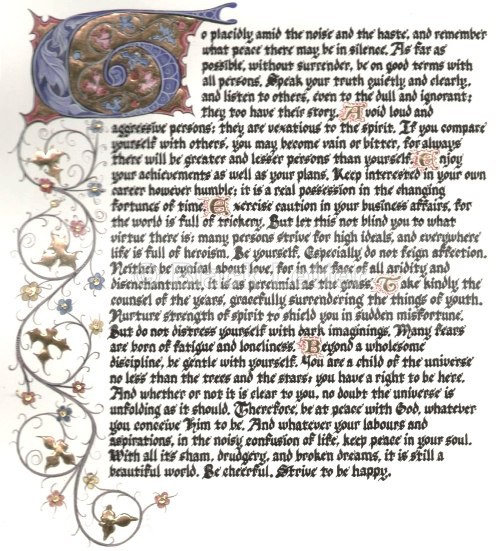
Most frustrating is the fact that I find apologies wholly inadequate. “Sorry” never feels like enough. It feels wretchedly impotent. And to look into the eyes of someone I care about only to see their hurt and, in fact, their shock that it’s me — someone who cares about them — who has caused their pain is among the worst feelings in the world to me. I want them to see me in the way they saw me before I fucked up. I want them to believe I’m still shiny. That they can trust their judgment and instincts. And, yet, they may never again see me in the same way. It’s humbling and incredibly sad.

All I really have to offer, though, is “I’m sorry” and corrective forward action. ‘Living amends’ as they call it in 12 Step programs. But even as I look at the words on the page, I think, “How can those feeble words fix anything?”

Here’s what I wish I could do: I wish I could open a window to my “broken and contrite” heart so you could see what was in there. You could see my intentions for yourself. You could see how much you matter to me and how much I cherish you exactly as you are.

But I can’t do that. So, I’m left with “I’m sorry,” a promise to think before I press “publish,” and a promise to do better at aligning good intention with good action.

I’d also be willing to throw in a jar of pickles for good measure.


The unfolding of things

One of the things I always say is that things will unfold as they should. I’m obviously not the only one who says this and I’m certainly not the originator of that idea. The phrase actually comes from Max Ehrmann’s 1927 devotional poem called Desiderata (which is the Latin word for ‘desired things’). If you’re a child of the ’60s or even ’70s, you will be familiarly with this poem. You (or your parents) might have had the poem on a poster, t-shirt, fridge magnet, toilet seat cover, embroidered tea cozy, or hand painted wall mural.

ImageTo this day, you can buy parchment versions of the poem with its iconic illuminated letter G (Go placidly…”), like it was written by some lonely, half blind medieval monk. Desiderata is part of the canon of my childhood. Suffice to say, it was the anthem of a generation.

The passage in question goes thus:

You are a child of the Universe, no less than the trees and the stars;
You have a right to be here.
And whether or not it is clear to you, no doubt the
Universe is unfolding as it should.

Interestingly, the poem was never famous in Ehrmann’s lifetime. It’s as though he wrote it in preparation for another time…yet to come. A time when people would begin asking questions, challenging tradition and, most importantly, recognizing that self-worth was a birth right. It seems he wrote it for the dawn of the Age of Aquarius. Desiderata, written before the Great Depression, is eerily enlightened. Even more bewildering is that Ehrmann was a lawyer…a profession in which waxing poetic about the soul and destiny is unorthodox (and unexpected) to say the least. He was also 54 when he wrote the poem. This fact is only interesting in that it gives me hope that fame is possible in later life.

Desiderata ended up on spoken word records in the 70s, the oddest of which may be a recording by Leonard Nimoy on his 1968 album entitled Two Sides of Leonard Nimoy. I kid you not. If you search YouTube, you’ll find a number of readings, but I highly recommend the version read on SpokenVerse’s channel.

So, that’s where the saying comes from…but what do we mean when we say it? I’ve heard atheist, agnostic and believer alike utter these words. How can they all believe it’s true…that all things will unfold as they should? Because to utter these words is to believe that there is an order to everything we do that ultimately ‘works out.’ Somebody or something’s got a plan, in other words.

It’s as though life is a huge box of puzzle pieces and they magically fit themselves together as we progress through life. We often try to do the puzzle solving ourselves, to no avail. Why? Because we can’t see the big picture..literally. I’m talking about the one on the puzzle box of the whole image. That’s what you use to help complete the puzzle, to organize pieces and gauge your progress.

That, my friends, is the kicker. We do not know how we fit into the grande scheme. Are we an edge (very handy!), an obvious detail we can identify and place quickly, or an amorphous shaped colour among a hundred others?

More than that though, we tell ourselves and each other that things will unfold as they should to comfort ourselves against the horrible realization that there is very little in life we can actually control. Random events are destabilizing. I wrote in a previous post about choices and how one small choice can create a cascade of huge consequences. I think about the woman in Quebec who stopped her car to help some ducklings across the road. A motorcyclist speeding from behind didn’t stop in time. He and his passenger were killed and the woman who stopped her car to do something kind is now (unbelievably) facing life in prison. One choice.

As I think about that poor woman, I wonder how this is life unfolding as it should. Why ‘should’ this happen. What larger purpose does this tragedy serve? What will “unfold” as a result?

The other kicker is that we can’t make sense of the events except by looking in the rear view mirror. It’s only then that we can see how decisions and events conspired to create meaning. Knowing gives us evidence. And evidence, girls and boys, is comfort. Evidence is the antidote to superstition and delusion.

The idea that things unfold as they should (not necessarily as we want) does give me comfort. I like knowing that order trumps chaos. I like knowing that there is cosmic purpose to everyday choices and events. I like knowing that I’m playing a role in this giant puzzle…even though I’ll never know what that role is until the time comes for me to see the puzzle box.

Jimmy Stewart’s character got a preview in It’s a Wonderful Life. He got to see how it all fit together. He saw that he wasn’t a cog, but the hub around which an entire town turned. It made all the difference. I envy him that gift.

It makes me wonder: if you could see the role you’ve played in the grand scheme of things, how would that affect you going forward, if at all? Would you be more mindful of your choices? Would you be paralyzed by second guessing your choices? Would you feel unburdened, knowing that you were needed…that without you, the puzzle would remain unfinished.

Ultimately, I believe that our lives are about fulfilling our purpose in the puzzle. We may achieve that purpose quickly or it may take a hundred years. In any event, when we’ve done our part, we leave the field, climb to the top of the stadium and look down at what we’ve helped build. The knowing will be joyous…because we will see, finally, that we were essential to life. And that everything indeed unfolded as it should.

**dedicated to Jody Lundell and Laurie Barnstable, whose contributions to life are much and many**

Wishful choices and the irony of happiness


One of the essential and basic actions that define the human experience is the power to choose. Agency. Self-determination.

Choices. We make them every day. In fact, we make thousands of them every day. We make what I call “nano-choices” – those choices so minuscule and seemingly inconsequential that we can’t even remember making them. Cross our legs. Turn a page. Change a channel. Add more salt. These are all choices. Small, minute.

There are then larger choices: micro-choices. Still small, but somewhat more noticeable. Toast instead of cereal. Blue shirt rather than black. This route to work rather than that. Day-to-day choices that represent the operation of life. Often, we only remember making these choices when something out of the ordinary happens. If we get in a car accident, for example, we revisit the route choice we made earlier. If we’d chosen to leave home five minutes earlier…or later…we would have avoided the accident. Right?

Naturally, there are milestone choices: buying a house or a car. Getting married. These choices serves as sign posts in life. You remember when they happened, where you were, who else was there.

Then…there are the macro-choices. There aren’t many. Choosing whether to accept treatment for a terminal disease is a macro choice. Choosing to remove a loved one from life support. Choosing to escape an abusive relationship. Choosing to step into harm’s way to help someone in peril. You see the pattern here. Macro-choices are life and death.

Though you may never have articulated any of this, as you read through the above paragraphs, you likely nodded. Added a few of your own examples.

But then there are choices we try to make…but do not succeed in implementing. We want to eat better, be more active, stop smoking, stop drinking, watch less TV. We choose to be better…and yet we also choose to ignore that choice. We debate. Argue. Bargain. Finagle. Trade. With ourselves. We embark on an internal dialogue to stop us from making a choice that will improve our lives.

Makes. No. Bloody. Sense.

What should we call these choices? The ones we want to make (do we? really?) and yet cannot implement? Let’s call them “wishful choices” – like wishful thinking.

We even set start dates and deadlines for our wishful choices: “Starting tomorrow, I’m going to ….” We feel sure, grounded, hopeful. Yet when the deadline appears…we fail to exercise that choice. And so it goes: want the choice, schedule the choice, fail to implement the choice, experience self-loathing, repeat.

You’ve no doubt noticed that these choices are usually connected to compulsive or addictive behaviours. You’re going to quit drinking (you don’t). You’re going to exercise more (you don’t). You’re going to eat better (Three guesses. The first two don’t count).

Here’s the truth no one will tell you or admit to: no one ACTUALLY wants to succeed at their wishful choice. In reality, we all just want to continue with the behaviour without experiencing the negative consequences. That’s what we really want. And we keeping trying to skip out on, elude, get past, sneak by the consequences. We never, ever, do. Never.

And, by we, I mean me.

I have my share of addictive peccadillos, trust me. My brain simultaneously coaxes me act on an addictive behaviour and then berates me for doing so. It’s a hellish existence inside my head.

And, when I hear other women talk about their issues — and women have at least one behaviour they ‘just can’t control’ — I hear the same phenomenon.

My beloved former-psychologist, Rosa, doesn’t like the use of battle metaphors when it comes to “wishful choices.” She believes the use of the language creates the reality. Maybe she’s right. She’s a believer of awareness, mindfulness and non-judgment. It’s amazing how hard those things are when I make a decision and then do the exact opposite. No one judges me more harshly than I judge myself. Full stop. You’re nodding again. You too?

I hope you’re not expecting an answer here. I ain’t Oprah “I’ve figured out everything” Winfrey. I’m just a fellow traveller.

What does seem clear in all this is that brain science is at work. The neural wiring for addictive behaviour must be powerful mojo. Think about it: if you’ve always usImageed food, for example, to calm your nerves and comfort yourself, then your brain has hard wired that connection in. Eating = no anxiety. Powerful association!
We also know from brain science that the more an activity is repeated, the more space in the brain the wiring for that activity takes up. So, trying to do something different isn’t just about choice…it’s a neurological David and Goliath battle between the little desire to change and the huge, hardwired neural network that is the established behaviour. (Read Norman Doidge’s fabulous book The Brain that Changes Itself to learn more about this.You’re welcome.) It’s not a fair fight in many respects.

AND YET…we know that some people are able to create significant, sustained change in their lives. How? It’s not just willpower, I can tell you that for sure. Willpower is like a match: it burns brightly and is spent easily. Willpower is not enduring. So…what is the enduring ingredient that makes sustained – even permanent – change possible for some? Don’t look at me…I have no fucking idea.

Nope, I have no answer to this question 0f wishful choice…a question that has vexed me my entire adult life. Is the answer in self-discipline (another elusive word. Don’t get me started), in prayer, meditation or pharmaceuticals? All of the above? Or are we more fixed than we realize. Is there a point at which we are what we are and no amount of effort or wishful thinking can change that? Every day, I edge more toward that conclusion. If it’s true…it creates a whole other set of questions. Perhaps the most compelling of these is: if our behavioural development is largely fixed at some point, what purpose will self-loathing have in our lives? Would it become obsolete?

This thought exposes a huge cosmic irony: if there were no ‘ideal’ way of being to aspire to or wish for, would our only recourse be to love and accept ourselves as we are?

Could abandoning “wishful choices” be one of the keys to happiness? Stick THAT thought up your jumper and see if it itches.

Discuss.

You are here.

How I feel about 50

Everyone has one of THOSE birthdays. The one birthday that, for whatever reason, hurts your feelings. For some it’s 25 or 30. For others it’s 40…or 70. Some harbour resentment for odd birthdays in between the milestones: 37, 43, 26. Eventually, we all run into a number that makes us feel the Christmas dinner weight of our mortality, the hornet’s nest fragility of our existence. We all eventually run into that birthday where we realize…we’re going to die. We realize it’s not a theory. We realize we’re not exempt. We realize it will be a surprise (more or less).

For me, that birthday is 50. And it’s bearing down on me. In fact, if 50 were a person, it would be talking to me like this:

Now, naturally, everyone else is thrilled that my birthday is coming up. They’re asking me what I’m doing. What item I’ll be crossing off my bucket list. What special, once in a lifetime thing I’ll be doing. At the very least, WHEN’S THE PARTY!? Normally, I love my birthday. I lovingly refer to it as Lisa-Fest and remind people how many shopping weeks they have left.

I have spent weeks trying to figure out how to celebrate this huge milestone…until  it dawned on me. How can I celebrate when I’m grieving? Now, please, spare me the “at least you’re alive” and “you’re only as old as you feel” crap. Remember…everyone has that one birthday that hits them like a kick in the ass with a speed skate.

I don’t want to pretend to be happy about turning 50 to make you more comfortable. I don’t want to pretend to feel happy about turning 50 to avoid being unhappy about turning 50. To quote the brilliant and cogent Carmen Spagnola, “Fuck Happiness.” (Follow the link to her video. It will change your life.)

I want to be unhappy about turning 50 until I’m no longer unhappy about it. I want to be unhappy about turning 50, so I can be happy about turning 51. Because here’s the thing…and don’t let anyone try to sell you a truckload of horse shit…when you’re 50, you’re no longer young. TRUTH BOMB. TRUTH. BOMB. I’m not saying I’m elderly. But…my. youth.is.over. done. kaput. finis. To suggest otherwise is a lie, a platitude, subterfuge, patronizing horse shit.

So, pardon me all to fuck if I take a moment to grieve that. I’m old enough not just to be someone’s mother, but their grandmother. So, yeah, the curtain has come down on my youth. The music icons of my teens and 20s are dead or grey haired, pot-bellied, jowly grandparents. Some of them have aged gracefully (Peter Gabriel, Annie Lennox, any of the Go-Gos pretty much). Others are just sad and pathetic (Adam Ant,  David Lee Roth, Axl Rose). I will soon work with people who were not alive when Princess Diana was killed. I remember how smug I felt when I told people at work I wasn’t alive when Kennedy was shot. They couldn’t imagine how that was possible. Now I know how they felt.

Our youth is like $100 life gives us to spend. And it seems like all the money in the world. I can tell you I spend some of it like a drunken sailor, thinking there was plenty more where that came from. I gave a chunk of that allowance away to people who didn’t deserve a dime and I should have given more of myself to others. I hoarded that allowance selfishly. And now here I am and the $100 I got for my youth is all spent. No do-overs. It is what it is, as they say. I’m no different than anyone else, though. Everyone will go through their books and do their own accounting. They’ll assess how well they spent their youth allowance. I could have done better. I could have done worse. Doesn’t matter. It’s all spent.

So, I’m going to grieve that time. And when I’m done I’m going to go back to the Bank of Life and pick up my next pay cheque…apparently my $100 middle age allowance is in….and I really need to pay attention to how I’m going to spend it.


The Unbearable Weight of Being

Today, after work, I stopped to get groceries. I rarely do this on a Friday night. Not that it matters. I spent about $15o on a wide range of food…some of which was even healthy. I paid with my debit card with its unreliable chip that tells the cashier the card is declined. This error (and, indeed, I’m compelled to tell you it’s THE CARD and NOT ME) invariably leaves me feeling like poor Debra Winger in that scene from “Terms of Endearment” in her character – a emotionally and financially struggling mother  – is humiliated by the cashier who yells to everyone in Creation that Debra doesn’t have enough money to pay for her groceries.  Thirty years later and I still want to punch the fictional cashier in the throat.

I rattled my cart of groceries out to my car and proceeded to load them into the back when I hear someone say, “Do you like perogies?” I was surprised both by the randomness of the question and its silliness because…come on!…WHO DOESN’T LIKE PEROGIES!

I peeked out around my car’s hatch to see an elderly women who, in retrospect, looked a bit like a Ukrainian version of Queen Elizabeth. She was dressed in a bright blue, well-worn cardigan, modest skirt, sensible orthopaedic shoes, and a bright floral head scarf tied in a very traditionally Ukrainian way (and, having worked at the Ukrainian Village historic site as a tour guide for three summers, I say this with some authorpavlov-posad-scarfity). The picture on the left gives you the general idea.
This woman, who was in her late 70s at least, looked at me through bright blue eyes and spoke to me with the kind of tired, but heartfelt enthusiasm one only finds in winter sunshine.

“I make perogies. I sell you them for $5,” she offered in a thick accent.

She pulled a small newspaper wrapped bundle from, of all things, a LaSenza bag. In the bundle was a baggy with perhaps eight homemade perogies. How did I know they were homemade? My friends…once you’ve seen homemade perogies made by a  Baba, you can spot them anywhere.

Now, I’m a debit card person. It is a rare day when I have cash on me. I prayed to any deity that might be listening that I could scrape together five bucks. I did. In change. And I placed the pile of loonies and quarters into hands that have never done anything but hard, physical work. And she gave me my perogies.

It was so unusual. The entire encounter made no sense until I saw her working her way through the grocery store parking lot, trying to sell little bundles of perogies.

And. My. Heart. Broke.

I immediately wrote her story in my head: poverty, homelessness. But it didn’t fit. She was well turned out, looked very healthy, had spectacularly white dentures. What then? What led this beauty to shuffle from person to car to person to sell her perogies in a parking lot?

Poverty cannot ruled out, of course. Single elderly women so often live below the poverty line in our wealthy country. Was it loneliness? The need to be useful, to continue to work and contribute in some way? I wrote many stories for that woman…all of them heartbreaking.

But what was the hardest to watch was how person after person in that parking lot said no to her $5 perogies. Or wouldn’t roll down their car window to speak to her…like she was some twitching meth head threatening their lives.

I didn’t know what to do. I wanted to run to the bank machine with my faulty debit card and take out all my money and hand it to her. But I didn’t know her story. I only knew the one I’d written in my head. And that story hurts and haunts me. I hope I’m wrong. I hope she’s a shrewd business woman who sheds the Baba get up when she gets home and counts her perogy-begotten gains while she laughs with her family.

Then there was this moment. The moment when I thanked her for the perogies. The moment she thanked me back and said, “Happy Mothers’ Day.”

Whoever you are and whatever your story…Happy Mother’s Day to you, too.


Image

Rabble Rousing

DSCN3260In the early 90s, I had the great privilege of seeing Andrea Dworkin speak at a conference. Even at the stupid age of 25 (you only know it’s a stupid age when you’re almost twice that), I knew this was a exceptional moment. I was in the presence of one of the great modern feminist minds. Dworkin, for those of you who don’t know, is not for the faint of heart. She was a ‘radical’ (whatever that means), in your face, intelligent, aggressive (whatever that means), take no prisoners challenger of the patriarchal bullshit. She made me uncomfortable. She made a lot of the people in the room uncomfortable…as she simultaneously open our eyes, our minds to the ‘holy fuck’ of the truth she was telling. We don’t get a lot of that in the nice, sanitized world of a TEDtalk or pecha kucha. 

There was a time when Dworkin would have been burned as a heretic, a witch. Modern society does it differently by making rabble rousing women irrelevant. How? Look at Hillary Clinton…perhaps one of the most powerfully intelligent women in the politics today. When her daughter revealed her pregnancy, media questioned whether Hillary Clinton could “balance” being President AND a grandmother. What. The. Fuck. This is how we make women irrelevant. By attaching them to irrelevant discourse: fashion, hair, body size, etc. It’s simple. And effective.

All this to say, I dipped a toe into the world of rabble rousing today…knowingly. I posted something on Facebook and Twitter that I knew would be controversial to some. The post went thus (It was somewhat shorter on Twitter):

Easter: when Jesus emerged from a cave, saw his shadow & predicted 6 more millennia of us being douche bags to animals and each other. No wonder he hasn’t been seen since.

What inspired the post was a news story on how calves are immobilized for their entire lives in order to get the ‘best’ veal. It’s horrific. It’s not this one story, however, that drove me to fury…it’s been story after story after story. From the abuses at Seaworld from deadbeat hicks torturing cats and dogs. From gang rape in India to dead babies stored in garages, we are living in a cesspool of abuse and horror.

I mentioned Dworkin at the top of this post because she came to the podium at that conference and said, “There’s an emergency.” The emergency was that there were so many news stories about the brutalization of women that she could not remember the women’s names. It was so common place, that she was forgetting to be horrified. It was so every day that she was becoming indifferent to the fact that real people were suffering.

The interesting thing about my post is that, on Facebook, the people who were offended were more offended that I’d made a joke about Jesus (a person who, if he existed at all, has not lived for more than two thousand years) than about the current day atrocities to which I referred. Let me re-state that for effect: they’re more concerned their religious sensibilities have been hurt by a smart aleck post and less concerned with real suffering, real abuse and real atrocities that are happening NOW, TODAY, IN OUR COUNTRIES, IN OUR CITIES,  and ON OUR STREETS.

I don’t give a rat’s ass about your religious sensibilities. Wake up!

I don’t want to mislead you. I’m a lazy person who thinks about things more than I act. I’m the Queen of Tut Tut, Oh My and Isn’t that Awful. But even I’m being horrified out of my inertia. This is exactly what Dworkin was trying to do during that keynote. Wake us up. Remind us to be horrified. Remind us to act. Remind us of the choices within our power.

Finally, I’m horrified enough to act. Enough of this shit.

What’s your threshold?