Demanding completion

My friend Carmen Spagnola is an intuitive, hypnotherapist, Cordon Bleu trained pastry chef, vision quest leader, entrepreneur, mother, wife, sister-friend, and badass. Not necessarily in that order. In fact, one could argue that the last in that list is a pre-requisite for all the others. She’s a hell raiser in a shy, unassuming chocolate-eyed, peaches and cream skinned shell.

2018-03-25 08.23.13

Over the last few years, I’ve been lucky enough to have Carmen do some readings for me. Some to look at the year ahead; some to look at an issue in the moment. At the end of every session, when Carmen has stopped taking dictation/translating for the Universe, she simply says, “That feels complete.” I’ve always liked the way she wraps things up. First, it seems an extraordinarily deft and polite way of saying “Time’s up, I take cash, Visa or debit.” No matter how intimate the topic or insights, one must remember it is still a business transaction. More than that though, it actually does feel complete. I feel full of information, feeling and, well, mystery, is the only way I can think to put it.

It got me toying with this notion of completion. Is Carmen merely stating the obvious when she says things feel complete or is she calling for completion? Does it matter? And if the latter, can anyone call ‘completion’ on anything? Is it like calling dibs on the front seat? I ask this because are there things in our lives – habit, relationships, beliefs – where we need to say, “That feels complete.” Do we have to do that to tell the Universe to stop, turn off the tap, close the book, move to the next station. Have we been stuck in patterns and cycles simply because we haven’t said, ‘Thanks. I’m good now. What’s next?” Could it actually be that simple?

I recently listened to a podcast by Rob Bell, about whom a couple of people I know rave. I’m not an early adopter when it comes to ‘thought leaders du jour,’ but I was looking for something to listen to and picked one of his older podcasts at “random.” I also resisted listening to Rob Bell because of his roots in conservative Christianity. In fairness, he’s an enlightened person who has, in fact, been rejected by many corners of conservative Christianity because of his liberal views (and he cusses. So does Carmen. I could never trust someone who doesn’t cuss.)

In this particular podcast entitled “Two Things I Ask of You,” from his series on Wisdom, Bell deconstructs Proverbs 30 to talk about a whole mess of things. The Proverb (30:7-8) reads:

     Two things I ask of you, Lord;
    do not refuse me before I die:
     Keep falsehood and lies far from me;
    give me neither poverty nor riches,
    but give me only my daily bread.

Don’t get hung up on this being a passage from the Bible. It’s a book. We non-Christians are allowed to look at it and *gasp* even read it. Bell spends much of the podcast talking about the demands made in the Proverb. Do not refuse me strikes him as particularly cheeky. Bell, in his deconstruction of this Proverb, says some cool things. Among them is the idea that prayer is not this passive, polite conversation with the clouds. Rather, prayer is an urgent demand, Bell tells us. Do not refuse me.

I’ve got a few things in my life and my soul that need to be done once and for all. Urgently. I did not know until listening to Carmen and to Rob Bell that I could ask for completion. I could ask for this life lesson to wrap up. I can graduate. To quote singer Aimee Mann, “It’s not going to stop til you wise up.” Oh, I’ve wised up, sister.

What I like about this Proverb is its call for moderation: …give me neither poverty nor riches, but give me only my daily bread.” Moderation has been a stranger to me most of my life. I have two gears: all or nothing. In some ways, to be honest, it’s served me. In most ways, it has not. All and nothing can tell the falsehoods and lies referenced in the Proverb. Keep them far from me. Do not refuse me. I need no more homework to learn the lesson about the perils of in feast/famine, poverty/riches, work/sloth. I’ve got it. And, so, to the Universe I say…

This feels complete.

Choosing travel companions

When I started this blog, I was on the precipice of turning 50. Now, almost four years later, I’m approaching my mid-50s. Anyone past the age of 40 will tell you they feel no different than they did when they were 30 (wiser, perhaps). This is true. My psyche doesn’t feel middle-aged, whatever that’s supposed to feel like. I just feel like, well, me. That is until I went on a trip overseas.

I recently returned from a rather rigorous trip through central Europe. Four cities in four countries in 8 days. It was overzealous to say the least. Amsterdam, Berlin, Prague and Krakow. No more than a day and a half in any city. Lots of time spent on trains, trams, subways and planes. If anyone asked me, I would tell them I love to travel. Love seeing new places, trying new food, torturing a foreign language. Yet, this trip I was aware something was different. I was afraid.

Be aware that there was no moment in which we were in any danger. If we were lost, it was for a few minutes at most because my friend and I were both adept at figuring out transit systems and unafraid to ask for help (Note: never underestimate the value of good wayfinding signage). Yet, I was riddled with anxiety the entire time. How would we navigate the next leg? (we always did) How would we manage to talk to people who didn’t speak English? (we always managed) How would we manage?! (we more than managed). Naturally, the question I asked myself was, “What the hell’s wrong with me?”

And, while there are many things wrong with me, on this account one of the variables is surely age. I wonder…have I lost the confidence and surety that comes with youth? Has it been replaced with the self-doubt and fear of the unknown that comes with knowing too much about what’s possible. All I know is that I could barely get out of my own way to be in the present, to fully enjoy the experience. Each hotel became the new safe place.

2018-03-30 18.08.48And here I was with my fearless 63-year-old friend, who would be continuing on travelling by herself after I returned home from Poland. If she was afraid, she never let on. For her, each challenge was part of the adventure.

If I ever was adventurous, it seems to have left me. I’ve become cautious and careful. Serious and circumspect. Is this indeed “me?” Have I evolved or devolved into this Bilbo Baggins of a person who never wants to leave her Hobbit Home or venture beyond the Shire. Of course, Bilbo eventually did for fear life would pass him by. He adventured, in many respects, against his will. It was only in retrospect that he fully realized the value of being “there and back again.”

Perhaps I’m just out of practice. Are we like swords that simply dull from lack of brandishing? Does one adventure beget more adventures? Do we forget to live if we’re not paying attention. Do we mistake breathing for life itself?

What I know for sure is that fear is dreadful travelling companion. It’s best left at home with the bills and the taxes. But fear will stowaway in your luggage and your pockets uninvited if you’re not vigilant. Courage, on the other hand, sits politely waiting for the word to come aboard. There’s only room for one of them on the voyage. I will not leave courage languishing at home again.

Image

A matter of life and death

My friend, whom I wrote about in the previous post, re-embraced eternity a week ago. There are no more hospital visits. No more medications. No more tubes and bags. No more delirium. The funeral is over. The words have been said. Now the living just continues. And so it goes.

I will never be able to find her anywhere again. I can go to her house and she will not be there. I will have abundant proof she existed, and yet she does not. That is the mind bending truth of death. The comic truth: death makes people disappear. Thanks for that, Captain Obvious. It may well be the most self-apparent thing you’ve ever read, but yet it is the most difficult thing about death. The most difficult thing to adjust to, to accept, to make sense of. Here one moment. Utterly gone the next.IMG_3851

I happen to believe there is sufficient mystery in life to make an unseen realm possible. You can call it what you will, but I think death is a labour that births us into a new life on another plane. We are midwifed by those who love us and mourn us on this plane and welcomed by those who have already arrived into the other place. It doesn’t matter why I believe that, but I do. Does it comfort me? Sure it does. It’s not that I’m rattled by the alternative view of finality and end. Quite the contrary. I just don’t think it’s true. So I don’t give that possibility much thought to be honest.

My friend was philosophical about her death. She knew it was coming soon and knew it would hit the rest of us hard. She was right on both counts. Death is coming for each of us. We know it cognitively, but we generally push the thought about the when away. One day in the hospital, I asked my friend if she’d be there to greet me when my time came and she said she’d be there with open arms. She added, “It may be sooner than you think.” I was alarmed for a moment, wondering if her nearness to death gave her access to inside information. And it well may have. Then I realized there’s not a damn thing I could do about it anyway. Que sera sera. I’ll stay as long as I’m supposed to…just like everyone else.

One of the best studies of death and the human condition was Alan Ball’s masterpiece Six Feet Under. With the tagline “Everybody Dies,” the show gave us a glimpse each week into the myriad ways people meet their Maker. Sometimes tragically. Sometimes comically. Always finally. In the very last episode, the series wraps up with a montage of how and when each of the main characters dies. It’s powerful and poignant. Everybody dies. Everyone will mourn someone. Everyone will be mourned by someone. When and how are the only questions unanswered. Are they the questions that matter though? How we lived is far more important a question. Did we raise others up while we were here? Did we leave things (including ourselves) just a little better than when we found them. Did we shift even one person’s life for the better?

I can tell you that my friend did all of those things. She was, by all measures, an ordinary person who made an extraordinary impact because she lived a life of compassion, honesty, love, forthrightness and high expectation. She did not choose how or when she died. But she most certainly chose how she lived. And what a life it was. What a wonderful life.

Go gentle…

There is a particular time of year — late spring but not yet summer — when the evening light — not yet twilight — is ethereal and otherworldly.

The light is at once lavender and plum, orange and ochre. The windows, which can now be left open after the long winter, chaperone the shy breeze as it consorts with the curtains.

No one is more delighted by this perfect moment than the birds, who chirrup and call to the stars while bidding good night to the sun.

It is a time of year and a time of day in which no time exists. A magical, sublime in between.

In a hospital across the city, my friend of almost 30 years is fading from the world. Each visit, I am greeted by a diminished version of her. A version closer to the transition into whatever comes next. Her body has whittled to bones like dry tree branches. Her flesh hangs off them like vines. Her body can barely shoulder this mortal coil let alone have the strength to shrug it off.

My friend’s mind is a tangle of dreams, memories, hallucinations and synaptic misfirings. Where a week ago we could muster a conversation, today there seems no sense to be made in her cognitive stew. Her bold, beautiful mind slowly disassembling as it prepares to separate from her body.

Dylan Thomas begged his father to “not go gentle into that good night.” He pleaded for him to “rage, rage against the dying of the light.” I have always loved those words — their call for nobility and courage. To fight to the end.

Fighting has its place. But not everything is a fight. Sometimes an embrace is what’s required.

So I picture my friend in the midst of one perfect moment — not spring, but not yet summer. Twilight, but not yet night. I wish for her to relax into the breeze and into the last of her breath. Let the birds call to her by name for they are God’s messengers.

Go gentle into that good, beautiful night.

Welcome, welcome the dying of the light.


Duchess – Lessons to be learned from harmony

Last fall, on a complete whim, I opened up Edmonton’s Yardbird Suite website to see what was playing. I’d never been there before, which is in and of itself a travesty. I was looking for a neat idea for date night with my partner. Lo and behold, I saw that a New York-based (although two of the women are originally from Canada) trio named Duchess was scheduled to appear. Three women singing 1940s harmony in the style of the Boswell Sisters. SIGN ME UP!

It was a sublime night of music. Duchess – comprising Amy Cervini, Hilary Gardner and Melissa Stylianou – were skilled, funny and imperfect (which, ironically, only served to make them more excellent).

The following spring, I was planning a trip to New York and thought I’d see if the famous trio would be in town. As luck would have it, they were playing a residency at
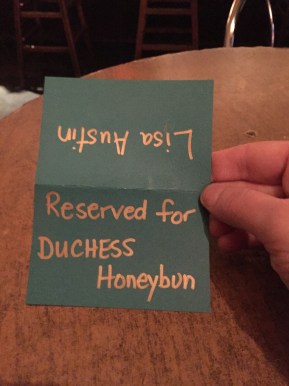
55 Bar (a very cool place on Christopher Street, beside the Stonewall Inn in NYC) the week I was there. They were gracious in their reply to my tweets and even moreso the night of the gig. They saved my friend and me a table duchesswith this card on top (see below). It was sweet and wholly unnecessary because my friend and I arrived embarrassingly early. However, there are perhaps 10 tables in the whole joint and, thanks to the trio’s kindness, we were front and centre. Lovely.

If I may digress, I must tell you about 55 Bar. It is a dive in the best sense of that word. As little white bread Canadians, we’re not used to strolling into little joints like this. In Canada, dive bars are truly that. In NYC, however, dive bars are de rigueur. This one is a kick in the pants. It is as narrow as a train car and about half as long. The bar takes up most of the right side and the few tables it boasts crowd the left. The artists are corralled into very small ‘stage’ against the back wall, and so sitting in front feels like being in the band. The bartender was hulking African American man named Kirby, who sweat profusely while he nimbly served drinks and made change for the folks in the room (Two drink minimum: an unchallenging goal for my friend and me). I have a feeling Kirby’s life would make a compelling biography.

Naturally, it was a great night with great music. Duchess was joined during their set by renowned clarinetist Anat Cohen, whom you may know as part of 3 Cohens with her two brothers, Avishai and Yuval. Anat rolled in with a couple of friends and sat at the bar waiting to join in. She has an unruly mane of dark, curly hair and looks appropriately hip. She struck me as quite unassuming, with the wry smile of someone aware they are in the midst of their dream life.

fullsizeoutput_5b5

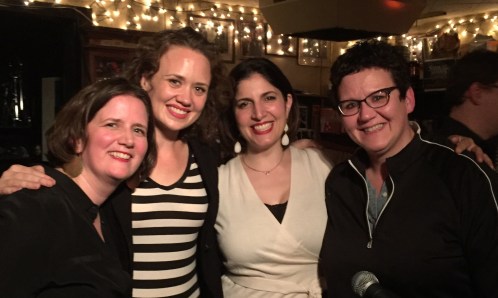
(fr left) Amy Cervini, Hilary Gardner, Melissa Stylianou, and me

One of our Duchess heroines passed Anat a raft of sheet music, which she clumsily spread across the seats of two chairs. She surveyed it, as the paper sagged between the two chairs, threatening to fall in a crumpled heap. Finally, she abandoned the sheet music and quipped to her colleagues, “Never mind. I’ll keep up.” And that she most certainly did.

Notwithstanding the last few paragraphs, the purpose of this entry is not to regale you with stories about Duchess. Rather, it’s what they symbolize that warrants this post: harmony, humility, laughter. They are not so precious or regimented that they’re unable to laugh at a missed lyric or being late to come in. They simply look at each other and try not to laugh their way through the rest of the song. They’re transparent about learning new songs, trying new arrangements, flubbing up their parts…about being imperfect. It’s a lesson for life, not to mention a sure fire way to charm an audience. They’re just as grateful they’re in the room as they are grateful for the audience. Their patter is clever and dances between well rehearsed and utterly spontaneous. Hilary, in particular, possesses a dry, self-deprecating wit.

The audience for them has not yet become an amorphous source of feedback in the dark – an applause machine rather than a group of people. The small venue offers the opportunity to interact somewhat, to acknowledge the very delicate partnership between audience and performer. (Of course, there’s always some loudmouth schnook in the crowd who believes his personal connection with the performer is a) the most important  and b) reciprocated in equal measure. It’s not, buddy.)

Mostly though, Duchess is about harmony. The musical kind, obviously. But it’ s bigger than that. They are what harmony looks like in action. They have a lesson to teach us about putting egos aside, sharing the spotlight, creating something greater than the sum of the parts…about laughter, friendship, mutual positive regard, and utter joie de vivre. It was a very pleasant surprise to discover, while sitting in a dive bar in New York, that these are the gifts Duchess offers anyone who is truly listening.


PS. You can buy Duchess’ music on iTunes. Go now. Do it. You’re welcome.


Fierce

For the last 10 or 12 years, I’ve sponsored a child through World Vision. She was a very grim faced Ethiopian four year old when I first received her picture. For the last 10 or 12 years, I’ve received regular updates about her health, schooling and well being. The time has passed quickly. Early in the spring of this year, I received the first picture in a long while. It showed a studious- and fierce-looking 16 year old with a textbook in her hand. I felt so proud of her…not because of anything I’d done, but because of everything she’s done and likely endured. A life for which I have no reference point.

Yesterday, I received a brightly marked World Vision envelope, telling me of important changes to my sponsored child. My first thought was that my sponsored child had “graduated” from the program and was no longer eligible. Sadly, the letter I received told me my sponsored child and her family had left their village and could not be located. The World Vision people tried to be comforting, telling me there could be many reasons a family leaves a village where there is sponsorship. They acknowledged that this news would be hard to hear.

Hard to hear? It was gutting.

What had happened to her? Was she alright? Was she alive? What would become of her?

However passive, I was a participant in her life. At least, that’s how I felt, only I didn’t know it until that moment. I had kept the picture of that little girl on my fridge for years, saying her name because it sounded so great to say. The picture ensured I held her in my thoughts. I didn’t know until the moment I read that letter that I had become connected to her somehow. I knew someone in Ethiopia and I cared about her.

And now she’s gone and I may never know what happened to that grim faced little girl who grew up to be a fierce looking young woman with a textbook. I suppose that in itself gives me hope…because is there anything more powerful in the world than a fierce young woman with a textbook?

I hope she is alive.

I hope she is safe.

I hope she is healthy.

I hope she is thriving.

I hope she is in school.

I hope she is laughing right now.

I hope she will be reading after she finishes laughing.

I hope that once in awhile she looks to the horizon, with the unshakeable feeling that someone is thinking about her. I hope she one day she knows that someone in a country so far away and so different from hers is saying her name.

Emunesh. Emunesh Kokob.

Live long and prosper, my fierce little friend.

What if love was your guest of honour?

You’re probably thinking that’s a ridiculous title. Isn’t love the ‘reason’ for the wedding in the first place? Well, certainly, that’s what we’re all told. And, so often, we believe what we’re told because we want to. But once you’ve been to a wedding where love was the guest of honour, you will forever know what a wedding is supposed to feel like. No matter how much or how little pomp, no matter how great or small the circumstance, a wedding with love as the guest of honour will leave you floating in a warm, phosphorescent pool of hope and possibility. You will forget your day-to-day troubles because, for one brief shining moment, you will have been allowed to forget that troubles exist.

Love is joy. And there is no duplicate.

IMG_3260I had the great privilege of being invited to a November wedding in Kelowna. It was a beautiful, understated affair…the most exquisite combination of traditional, retro and steampunk. It had all the storybook components: a stunning bride, a handsome groom whose eagerness to meet his bride at the front of the room was palpable, tearful parents, one of the bride’s three beautiful brothers moved to racking sobs as she walked up the aisle, and a room full of people who loved the couple so richly that if our love were currency, we’d make Oprah look like a pauper.

The shindig itself was a demonstration of love and generosity: the bride offering the first dance to her brother and sister-in-law who didn’t have a wedding, the mother-of-the-bride acknowledging (in lovingly teasing fashion) the current and other ex-wives of her ex-husband (and father-of-the-bride), talented friends of the couple offering up their show stopping singing chops to the shock and amazement of everyone. The two families and all the friends mixed, mingled, laughed and danced together until we were forcibly removed from the event venue.

Love stayed for the whole thing. Love sat at everyone’s table. Love produced everyone’s tears then asked its date Laughter to wipe them away. What made this wedding so different?

There are some practical reasons — the most important of which was because the couple were mindful about their guest list. The chose based on love, not on math. It wasn’t about numbers or political correctness…it was about love. They filled the room with people whose joy matched their own. Simple. From where I sat, there was not a soul in the room who was not beaming for them the entire evening.

But the real reason was that the wedding was a reflection of how they treat each other…with generosity, gratitude, silliness, and kindness. As the beautiful bride came uIMG_3238p the aisle and all the tear filled eyes in the room were on her, she exclaimed when she saw her soon-to-be husband, “Oh, you’re so handsome!” It was such unpolished, unadorned love. In the moment when everyone traditionally focuses on the bride and her dress and all that…all she saw and cared about was him. The only thing that kept her from sprinting up the aisle to him was her father on her arm.

The fact is Love loves a good story…and a good party. But Love is polite. It waits to be invited all the way in before it makes itself at home. Love is delicate. It can be confused by strife, disrespect, meanness, selfishness, pettiness, and neglect. Surrounded by this negativity, Love will often leave quietly and unnoticed through a back door. And you’ll wake up one day realizing it left without saying good bye.

On the other hand, Love is voracious. When fed kindness, respect, selflessness, and abundance, Love will eat you out of house and home. It will take over every room, nook and cranny. You won’t be able to turn around without finding it staring at you with that silly grin asking, “What you want to do now?” like a Golden Retriever puppy. The more it’s fed, the stronger it will become. And when it’s strong, Love is our Kevlar vest against the assaults of life and time. Couples will fight, we’ll feel afraid of any one of a thousand things, loved ones will get sick…Love will always sit with us and hold our hand. Love is loyal. Love can hold its breath longer than you. Love is kind. If you nurture it, it will handle anything you throw at it. It doesn’t keep a scorecard of wrongs. And Love will always think you’re awesome. There is no mistaking when Love is in the house.

But, if you’re not sure, send Love an invitation…. I can guarantee you this: Love will always RSVP.

for LCB

I saw that…

We are always looking for a witness. From the time we’re small, we’re nagging our parents: “Mom, Mom…look at what I can do! Did you see that?” Who we are and what we can do is not marvellous (we think) unless someone else sees it.

My childhood and adolescence were less than idyllic. My mother was mentally ill, particularly during my teens, and my father was a kind, but incompetent adult. I progressed through school without them taking any notice for the most part. No one came to parent-teacher interviews (I was actually surprised to discover this was not the norm), no one came to Christmas concerts and, up until the last minute, no one was coming to my high school graduation. Rarely did anyone from my family witness my school life. With one notable exception….

When I was in high school, I got rooked into being on the basketball team. I was tall, so I think the coach had hope I could just stand under the basket and score point after point. I was a disappointment in this regard to say the least. Still, it was good for me to be on the team for many reasons, not the least of which was because it got me out of the house and away from my crazy mother.

Naturally, being on the basketball team involved practices (two a week, if I recall), weekly games, and periodic weekend tournaments. The other girls’ parents would often come to games to see themIMG_0473 play. It never occurred to me that parents would do such a thing…of their own volition.
Our coach was a lovely man and a wonderful, inspiring teacher. He worked hard to teach us the game and develop our skills, but his real focus was on ensuring every girl on that team felt they belonged and had value. Despite his best efforts, I never scored a point from the field while he was coach…though I was reliable on free throws. It didn’t bother him. I still got to play the appropriate amount of time as a junior member of the team. Eventually, he left the school and was replaced by a vile little man with the face of a rodent and a woman’s name: Laverne. Who would name their son Laverne? This is likely why he was such as asshole.

His focus was on winning, so he only played the girls who were really good basketball players. The rest of us languished on the bench until, in the last few minutes of the game, he might patronizingly put one of us in. One evening during a home game, I looked over to the doors of the gym and saw something so rare and surprising it might as well have been Sasquatch. There was my mother standing at the entrance of the gym with her high-heeled boots and her garish fur coat. How she knew I was playing, I’ll never know. What possessed her to make my father drive her to the school (a doorway she never darkened) is a mystery beyond a mortal’s ability to comprehend. But there she was…in all her psychotic glory. And, more than anything, I wanted to get on that court. Goes to show you that no matter what a parent does to a child, the child nevertheless yearns to say, “Mom, Mom. Look at what I can do! Did you see that?”

I told Laverne the Rodent that my mom was there. Most of the staff didn’t know I actually had a mother, so he (like me) was legitimately surprised. To his credit, he did substitute me in. I learned from another teacher some time later that he said he’d never seen me play better basketball than I did in those few minutes on the court while my mother watched. You see, I just needed a witness.

We’re always looking for witnesses – to crimes, to accidents, to history. We look to others all the time to confirm an experience: “Did you see that?” “Did you hear what she said to me?””Did I imagine that?” Witnesses provide us proof that something actually happened…especially when we can hardly believe the reality.

Bearing witness to the experience of another is an honour we take for granted. Having someone bear witness to  our experiences is deeply connecting. And when we know someone has witnessed us in life without our knowing, it’s like they’ve seen us naked for, in a way, they have. If we are not conscious of the witness, we cannot be self-conscious ourselves. We exist in our natural, unobserved state.  Our humanity is, as a result, utterly visible. If that’s not intimacy, I don’t know what is.

We’ve become so blinded by life’s superficialities that we rarely have the opportunity to bear witness – to really see – for others. And what is a witness, but an archivist of moments, recording for posterity experiences outside of themselves. They are a kind of omniscient narrator, watching as characters move through an unfolding story. It’s from their vantage point that they can provide us with perspective, a replay of what actually happened, and help us remember details. The witness confirms our reality. Most importantly, perhaps, the witness provides the life affirming answer to one of first questions we may ask after we learn to speak: “Did you see that?”

“Yes. I saw the whole thing. And it was amazing.”

for J.L.


50 Conversations

When I turned 50, I decided to embark on a project to do podcast interviews with 50 women. The purpose is to ask them about their lives and for their advice for me going forward. The first interview is, of course, with my sister. It’s a half hour well spent, I think. We think we’re funny. More importantly, we think we can sing. You be the judge.


Euclid was wrong

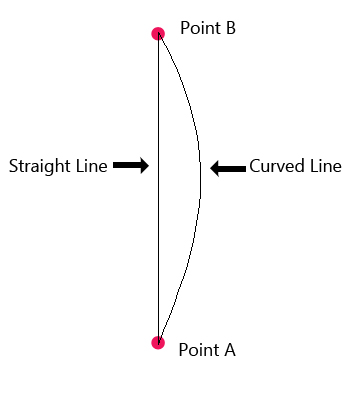
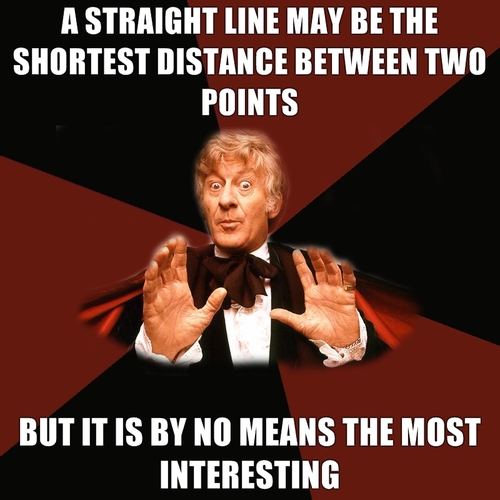
In Euclidean geometry, the shortest distance between two points is a straight line. You probably remember an awesome math teacher teaching you that concept in junior high. “Awesome math teacher” is a bit of any oxymoron, in my experience, but linesjI have been assured  there’s one or two out there.

Sadly, poor Euclid was wrong. I know. I should storm the halls of academe and announce him for the fraud he clearly is. I’ll be carried over people’s shoulders, lauded by universities around the globe and  given the Nobel prize! Well…okay…Euclid may have been right in the context of geometry, but in life his notion that the shortest distance between two points is a straight line just doesn’t hold water (I thought I’d bring Archimedes into the room for kicks).

Not so, Euclid, old chum. In fact, sometimes it’s the twists and turns, dead ends, long stretches of misdirection, and hopeless navigational sleights of hand that get us where we need to go the most expeditiously. In other words, we must be lost in order to be found.

Consider this: if we are standing in a cluttered room and are asked to find one small object, it can be very difficult if not impossible to spot it. Yes, we’re currently IN the room…the shortest distance to the object. But being in the room in not helpful. Everything around us is amorphous colour without definition. It’s the very reason we say, “Can’t see for looking.” In order to find the object, we may have to walk out of the room – get some distance – in order to return and discover what was right in front of us all along. Happens all the time.

How many times have you found what you were looking for right under your nose? It’s as though it was suddenly deposited by elves determined to compromise your confidence in your mental health. It was only went you stopped searching that you could discover. It was only when you walked away that you could come nearer to the thing you needed. Happens all the time. Euclid was wrong.

Line Not InterestingIn life, the shortest distance between points is often the distance itself…if that doesn’t sound too esoteric. Distance (or ‘leaving the room,’ to go back to my analogy) allows the subconscious, as the brilliant Carmen Spagnola recently taught me, to ‘school’ the conscious mind. Our conscious minds tend to need a lot of remedial help if you ask me.

So, Euclid may have known a ton about geometry, but his ideas aren’t much use in life. Sorry, pal. At least Archimedes gave us the good sense to either get into the bath tub earlier or turn off the water sooner.  Now THAT’s practical life advice!

Would we want to get from point A to point B in the shortest distance? I don’t think so. Not much fun or learning in that. It’s like any road trip: getting there is half the fun. And usually,  after all the bumbling around, just as you’re ready to give up searching, you stand there incredulously…because, often, point A is point B. And your straight line is actually a circle. And when you return to where you started, you give the searchers’ universal cry: “There you are!”

“Where have you been?” you ask as the veil is lifted on the real purpose of your journey.

But by then, you already know the answer.

“I was right here.”

Euclid was wrong.